
Tanzania

Ngorongoro Crater

A breathtaking natural sanctuary where the world’s largest intact caldera becomes an earthly paradise for Africa’s Big Five.

Established

1959

UNESCO Site

1979

Big Five

All Present

Best Time

Jun – Oct

About the Park

The Ngorongoro Crater is the world’s largest inactive, intact, and unfilled volcanic caldera. Formed over two million years ago when a massive volcano collapsed, the crater now acts as a self-contained “natural zoo” with walls rising 610 meters above the floor.

Beyond the wildlife, it is a place of immense historical significance. The nearby Olduvai Gorge is known as the “Cradle of Mankind,” where archaeological finds dating back nearly 2 million years have shaped our understanding of human evolution. Today, semi-nomadic Maasai pastoralists coexist within the conservation area, grazing their livestock alongside the park’s prodigious wildlife.

Regions of the Park

Regions of the Conservation Area.

  • The Crater Floor: The ultimate “Big Five” destination. A concentrated ecosystem of 25,000 animals living within a 20km-wide caldera.
  • Lerai Forest: A lush fever-tree forest on the crater floor, famous for its resident leopards and as a refuge for the majestic “big tusker” elephants.
  • Lake Magadi: A central alkaline lake that serves as a focal point for thousands of flamingos and a stalking ground for hyenas and golden jackals.
  • The Highlands: Rolling volcanic peaks and smaller craters like Empakaai, offering dramatic trekking opportunities and views of Lake Natron.

Wildlife

The Cast of Characters

🦏 ~30 Individuals

Black Rhino

The crater is one of the last places in Tanzania where you can reliably see these rare giants.

🦁 ~65 Residents

Lion

Known for their large manes and unique social structures within the enclosed crater walls.

🐘 ~300 Individuals

Elephant

Legendary "Big Tuskers" roam here, often found in the swampy areas or Lerai Forest.

🐺 ~600 Individuals

Spotted Hyena

The crater's most numerous predator, hyenas here are highly successful and social hunters.

🦩 Thousands

Flamingo

Lake Magadi often turns pink as thousands of Lesser Flamingos arrive to feed on algae.

🐃 ~4,000 Individuals

Cape Buffalo

Massive herds of these formidable bovines are a constant presence across the grasslands.

🦛 Significant Pods

Hippo

Best seen at the Ngoitokitok Springs picnic site, where they wallow in the cool waters.

🦓 Abundant

Zebra

Common Plains Zebras are always in sight, grazing alongside wildebeest and gazelles.

The World's Greatest Show

The Great
Migration

While the wildebeest migration does not enter the crater itself, the Ngorongoro Conservation Area (NCA) is a vital part of the cycle. From December to March, the Great Migration occupies the short-grass plains of the NCA and southern Serengeti for the calving season.

Calving Residents

~500,000 new calves annually

Resident Population

~25,000 animals inside the crater.

Predator Density

Highest predator-per-capita in Africa.
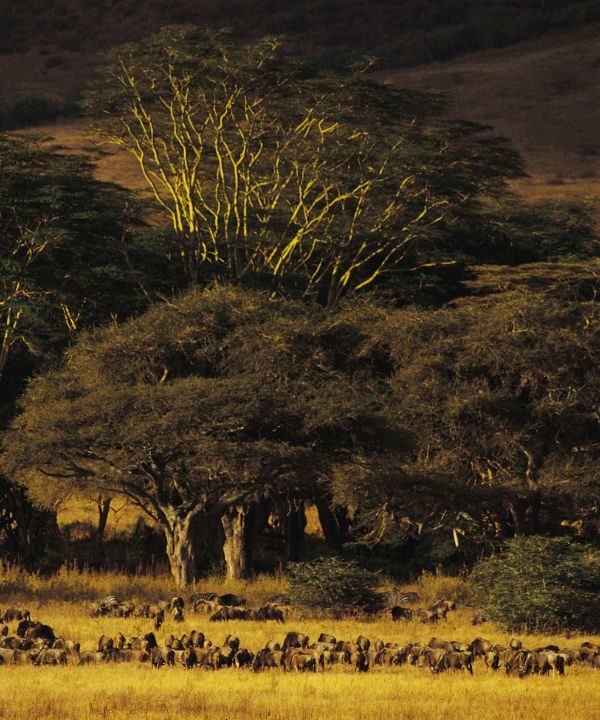
Wildebeest in Ngorongoro Crater

When to Visit

Ngorongoro by Season

☀️ Jan – Feb
Predator Peak

Migration calving on the nearby plains. Clear skies and high predator activity in the crater.

🌧️ Mar – May
Green Season

Lush, emerald walls and flowering crater floor. Fewer vehicles and excellent birdwatching.

🔭 Jun – Oct
The Dry Season

Best for rhino sightings and general game viewing as wildlife stays near water sources.

⛈️ Nov – Dec
Short Rains

Refreshing rains bring the herds back to the crater floor. Beautiful light for photography.

Start Planning

Ngorongoro Tours

Start Your Journey

Your East Africa Tour
Begins with a Conversation

Tell us your dream safari and our Tanzania-born specialists will craft a tailor-made itinerary — at no obligation. Browse our sample trips for inspiration, or let us start from scratch. Either way, we’ll make it unforgettable.