
1959
1979
All Present
Jun – Oct
The Ngorongoro Crater is the world’s largest inactive, intact, and unfilled volcanic caldera. Formed over two million years ago when a massive volcano collapsed, the crater now acts as a self-contained “natural zoo” with walls rising 610 meters above the floor.
Beyond the wildlife, it is a place of immense historical significance. The nearby Olduvai Gorge is known as the “Cradle of Mankind,” where archaeological finds dating back nearly 2 million years have shaped our understanding of human evolution. Today, semi-nomadic Maasai pastoralists coexist within the conservation area, grazing their livestock alongside the park’s prodigious wildlife.
The crater is one of the last places in Tanzania where you can reliably see these rare giants.
Known for their large manes and unique social structures within the enclosed crater walls.
Legendary "Big Tuskers" roam here, often found in the swampy areas or Lerai Forest.
The crater's most numerous predator, hyenas here are highly successful and social hunters.
Lake Magadi often turns pink as thousands of Lesser Flamingos arrive to feed on algae.
Massive herds of these formidable bovines are a constant presence across the grasslands.
Best seen at the Ngoitokitok Springs picnic site, where they wallow in the cool waters.
Common Plains Zebras are always in sight, grazing alongside wildebeest and gazelles.
~500,000 new calves annually
~25,000 animals inside the crater.
Highest predator-per-capita in Africa.
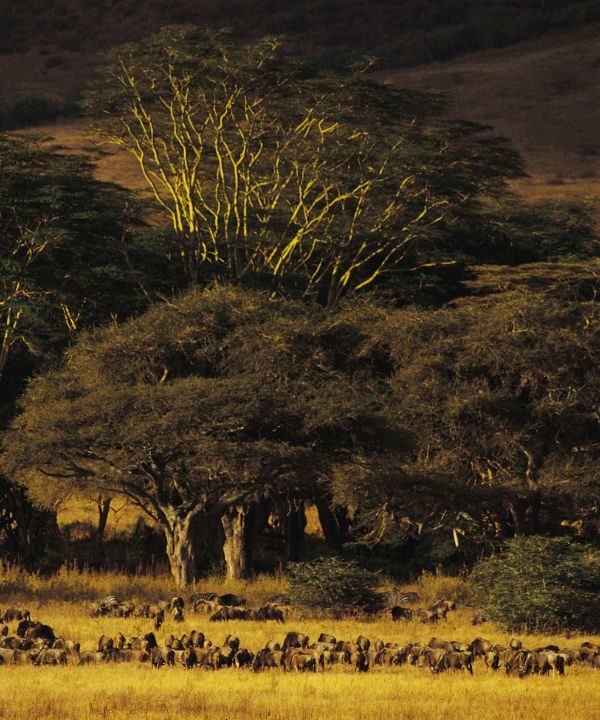
Migration calving on the nearby plains. Clear skies and high predator activity in the crater.
Lush, emerald walls and flowering crater floor. Fewer vehicles and excellent birdwatching.
Best for rhino sightings and general game viewing as wildlife stays near water sources.
Refreshing rains bring the herds back to the crater floor. Beautiful light for photography.
Tanzania
Tanzania
Tanzania
Tanzania
Tanzania
Tanzania & Kenya