
1973
Member of highest peaks
85%+ on longer routes
Jan – Mar and Jun – Oct
Mount Kilimanjaro is one of the world’s most accessible high-altitude summits, attracting thousands of trekkers every year. Unlike other high peaks, reaching the summit—Uhuru Peak—requires no technical climbing skills, only physical fitness and determination. The mountain is a dormant volcano composed of three distinct cones: Kibo, Mawenzi, and Shira.
A trek up Kilimanjaro is often described as a journey from the tropics to the arctic in a single week. Trekkers pass through five distinct ecological zones, starting in lush rainforests and ending among the ancient, retreating glaciers of the summit. It is a symbol of African majesty and a vital water tower for the surrounding communities.
Commonly seen in the lower montane forest zone before the altitude limits primate activity.
Prehistoric-looking plants that only grow at high altitudes, reaching up to 10 feet in height.
Often seen at high-altitude camps, these intelligent birds thrive even in the thin mountain air.
Extremely elusive on the mountain, though tracks have historically been found near the ice fields.
One of the world's rarest antelopes, this shy forest dweller is almost exclusive to Kilimanjaro.
A hardy rodent often seen darting between rocks in the moorland and alpine desert zones.
A brilliant metallic-green bird that feeds on the nectar of lobelias in the high-altitude heath.
Distinctive black-and-white primates that leap through the trees near the mountain's entrance gates.
Choosing a route is a balance between your physical comfort, your desire for scenery, and your body’s ability to adapt to thin air.
1. Machame Route (The “Whiskey” Route)
The Vibe: High energy and high success. It is the most popular route for a reason.
Technical Profile: Features the famous Barranco Wall, a non-technical scramble that is often the highlight for many trekkers.
Acclimatization: Excellent “climb high, sleep low” opportunities, making it a top choice for first-time high-altitude climbers.
2. Lemosho Route (The Scenic Masterpiece)
The Vibe: Remote, pristine, and premium. It begins in the lush rainforests of the west.
Technical Profile: A longer itinerary (typically 7 or 8 days) allows for a much smoother transition to high altitude.
Key Highlight: Crossing the vast Shira Plateau, one of the highest plateaus on earth, with spectacular views of the Kibo cone.
3. Marangu Route (The “Coca-Cola” Route)
The Vibe: Traditional and sheltered. It is the only route that utilizes permanent A-frame huts instead of camping.
Technical Profile: Often perceived as “easy” because the path is well-defined, but the rapid ascent profile actually results in a lower success rate for the 5-day version.
Note: You ascend and descend on the same path, which means less variety in scenery compared to other routes.
4. Northern Circuit (The Grand Circle)
The Vibe: Complete solitude and 360-degree vistas. This is the newest and longest route on the mountain.
Technical Profile: By circling the quiet northern slopes, you spend more time at a consistent altitude (around 3,800m to 4,000m), leading to the highest summit success rates (90%+).
The Draw: Remote wilderness and incredible views looking north toward the Kenyan border.
| Route | Days | Difficulty | Success Rate | Landscape Style |
|---|---|---|---|---|
| Machame | 6-7 | High | 85% | Diverse |
| Lemosho | 7-8 | Medium | 90% | Panoramic |
| Marangu | 5-6 | Medium | 50-60% | Classic |
| Rongai | 6-7 | Medium | 80% | Wild/Dry |
| Northern | 9 | Steady | 95% | Remote |
Reaching the “Roof of Africa” is a test of endurance and acclimatization.
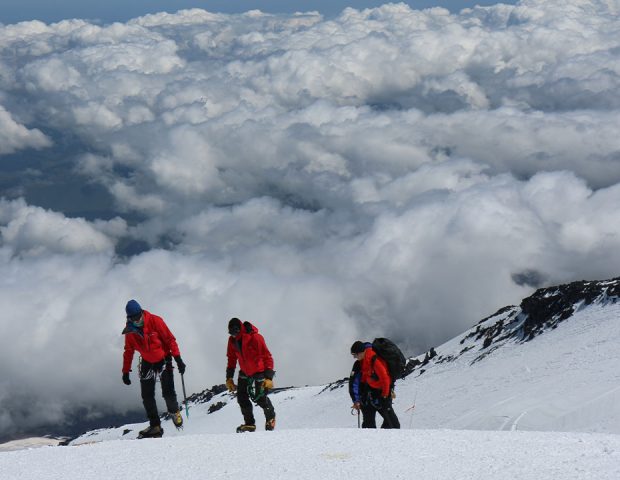
Excellent visibility and relatively clear skies. This is one of the most popular windows for summiting due to the dry weather.
Heavy rain and snow. Trails can be muddy and difficult. Recommended only for experienced trekkers seeking total solitude.
The main climbing season. Dry weather and stable conditions make this the most reliable time to reach the Uhuru Peak.
Intermittent showers mostly in the afternoons. Offers beautiful, clear mornings and far fewer hikers on the trails.
Tanzania
Tanzania
Tanzania
Tanzania
Tanzania
Tanzania